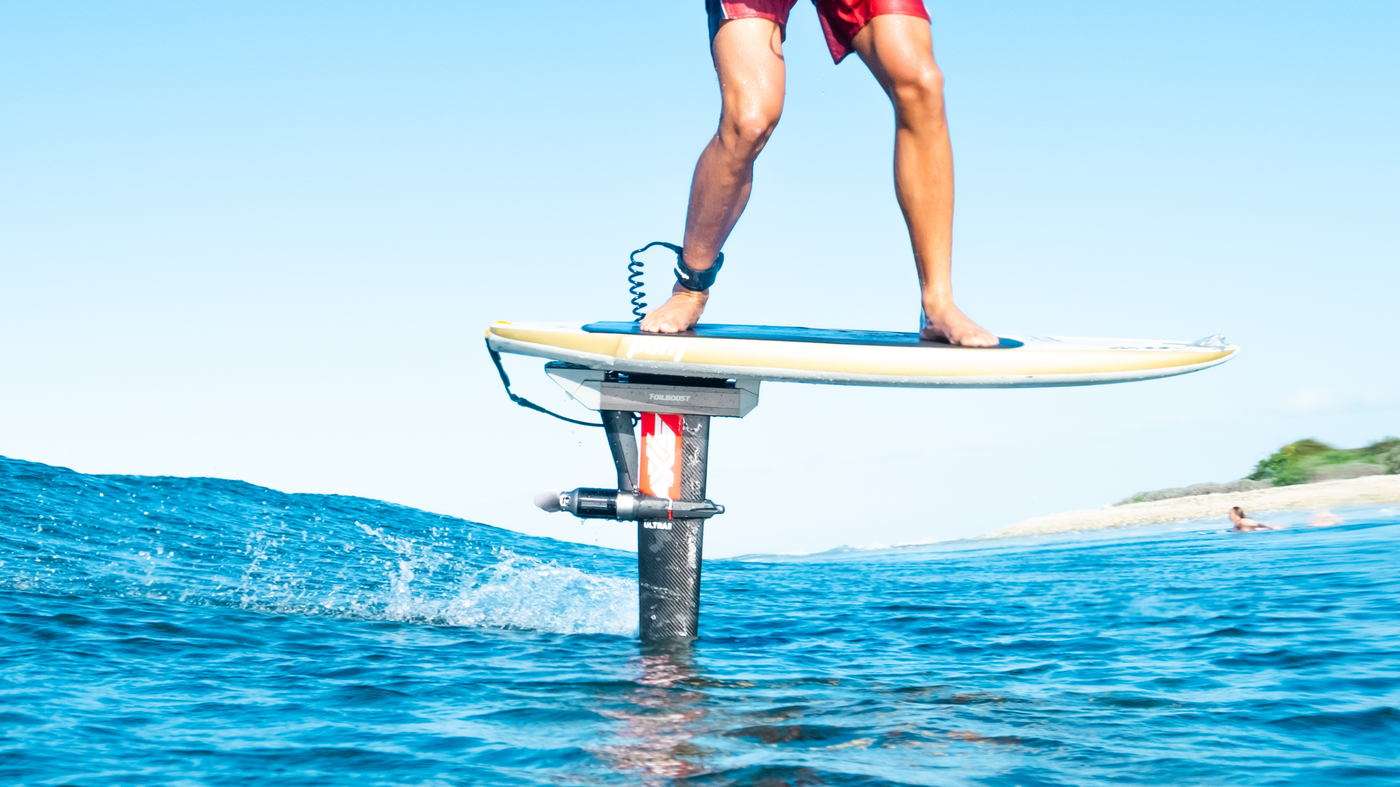
Thrust is the headline number on any foil assist, and it is the one most riders underweight. Here is what thrust does, how much you need for your weight and discipline, and why the gap between 25 and 33 kg shows up exactly where it hurts.
What thrust actually buys you
Thrust is how hard the motor pushes, measured in kilograms. It does one job above all others: it gets you onto foil. The takeoff is the hardest, most energy-hungry moment in foiling, and thrust is what shortens it. More thrust means fewer blown takeoffs, less paddling, and a faster route from flat to flying.
It matters most in three situations: when you are heavier, when conditions are weak, and when you are tired at the end of a session. Those are the moments a few extra kilograms of push decide whether you get up or sink back.
How much you need
As a rough guide, lighter riders in good conditions can get away with less thrust, while heavier riders and marginal days demand more. The problem with buying close to the minimum is that you feel it on the worst days, not the best ones. A system with headroom gets you up when a weaker one leaves you swimming.
This is why peak thrust is worth paying attention to. FoilBoost delivers 33 kg. Foil Drive's universal assist units sit at 24.5 kg on the Plus and 25.5 kg on the Slim. That difference is not about top speed. It is about how reliably you get on foil across riders and conditions.
Thrust is not the only number
Thrust gets you up. Battery capacity keeps you going. FoilBoost pairs its 33 kg with 432 Wh in a single pack, which is more than Foil Drive's standard assist batteries. The two together are what let you take more waves and ride more marginal days without a swap.
One honest note: a larger battery is heavier and cannot fly. If you travel by air with your gear, that is a real consideration.
Who benefits most from more thrust
Heavier riders, riders on smaller foils, downwinders chasing bumps, and anyone who hates a blown takeoff. If you are light, ride a big foil, and only ever foil in clean conditions, you have more room to compromise. Everyone else feels the headroom.