
If you have seen someone gliding above the water with no engine noise and no wake, you have probably asked the same question: what is that, and how does it actually work? This guide explains what an eFoil is, how it lifts you off the surface, and what to expect before your first flight.
What is an eFoil?
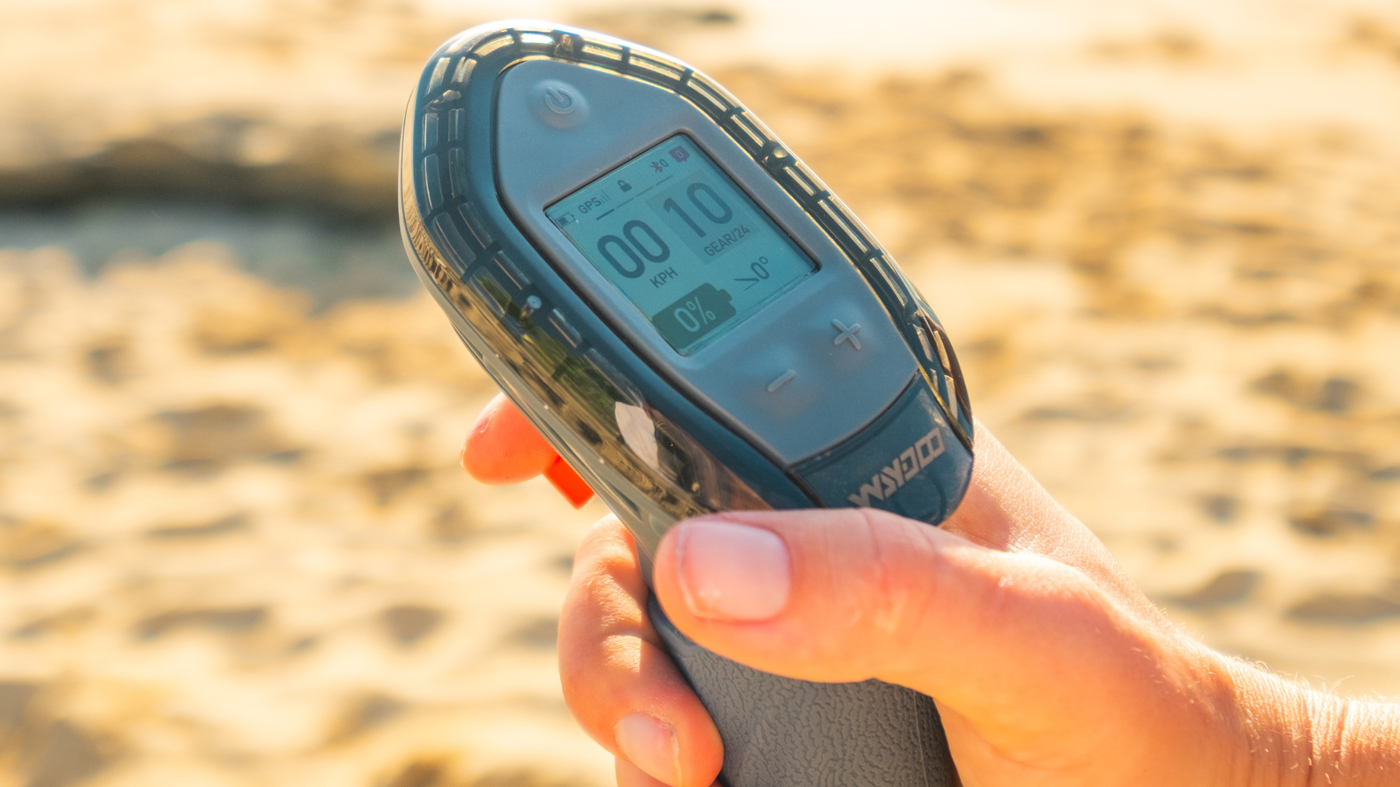
An eFoil, short for electric hydrofoil, is a board with a wing mounted under it on a vertical mast. A battery powered motor turns a propeller, and once you reach a low cruising speed the wing produces enough lift to raise the whole board out of the water. You end up flying a short distance above the surface, controlled by a wireless handheld throttle.
Because the board leaves the water, there is very little drag and very little noise. That is the sensation most riders describe first: quiet, smooth, and closer to flight than to any traditional board sport.
How an eFoil works, step by step
Three parts do the work. The battery stores the energy. The motor and propeller, mounted low on the mast, provide thrust. The hydrofoil wing converts forward speed into upward lift. You manage all of it with a thumb throttle in your hand.
At rest you lie or kneel on the board. You add power, the board begins to move across the surface, and as speed builds the wing starts to lift. With a small, steady increase in throttle the board rises onto the foil and you are flying. Ease off and it settles gently back onto the water. It does not rely on wind or moving water, so you can ride on flat, calm water such as a lake, a harbour or a sheltered bay.
What it feels like to ride
The first goal is balance on the surface, then holding a low, stable flight. Riders often describe it as gliding: the board is quiet, the water is below you, and small movements of your weight steer the ride. It is a calm, controlled feeling rather than a fast or aggressive one, which is part of why the learning curve is gentler than people expect.
The Waydoo Flyer EVO, on the facts
The Waydoo Flyer EVO is a modular eFoil built around this idea. The Flyer EVO Lite runs a 4000W motor, with a 6000W motor on the Max Plus, Pro Plus and Master. Batteries come in 1800Wh and 2300Wh, with a runtime up to around 120 minutes depending on the model and how you ride. Top speed is 36 km/h on the Lite, 45 km/h on the Max Plus and 52 km/h on the Pro Plus and Master. Masts are available at 27 and 35 inches, and the platform is designed so you can upgrade in parts rather than replacing the whole board.
Because the EVO is modular, a first setup can grow with you. The entry point is the Flyer EVO Lite, and higher models such as the Max Plus, Pro Plus and Master add the Flight Assist sensor system that helps stabilise the board while you learn.
Not sure eFoiling is for you rather than another way onto the water? If you already prone, wing or downwind foil and simply want help getting up in light conditions, an eFoil is a different product from a foil assist. In that case the Waydoo FoilBoost is the better fit, and we cover it separately.
New to the sport and wondering about the learning curve? Read Is eFoiling hard to learn, and if budget is your next question, see how much an eFoil costs in Europe.
Explore the Flyer EVO Talk to the team