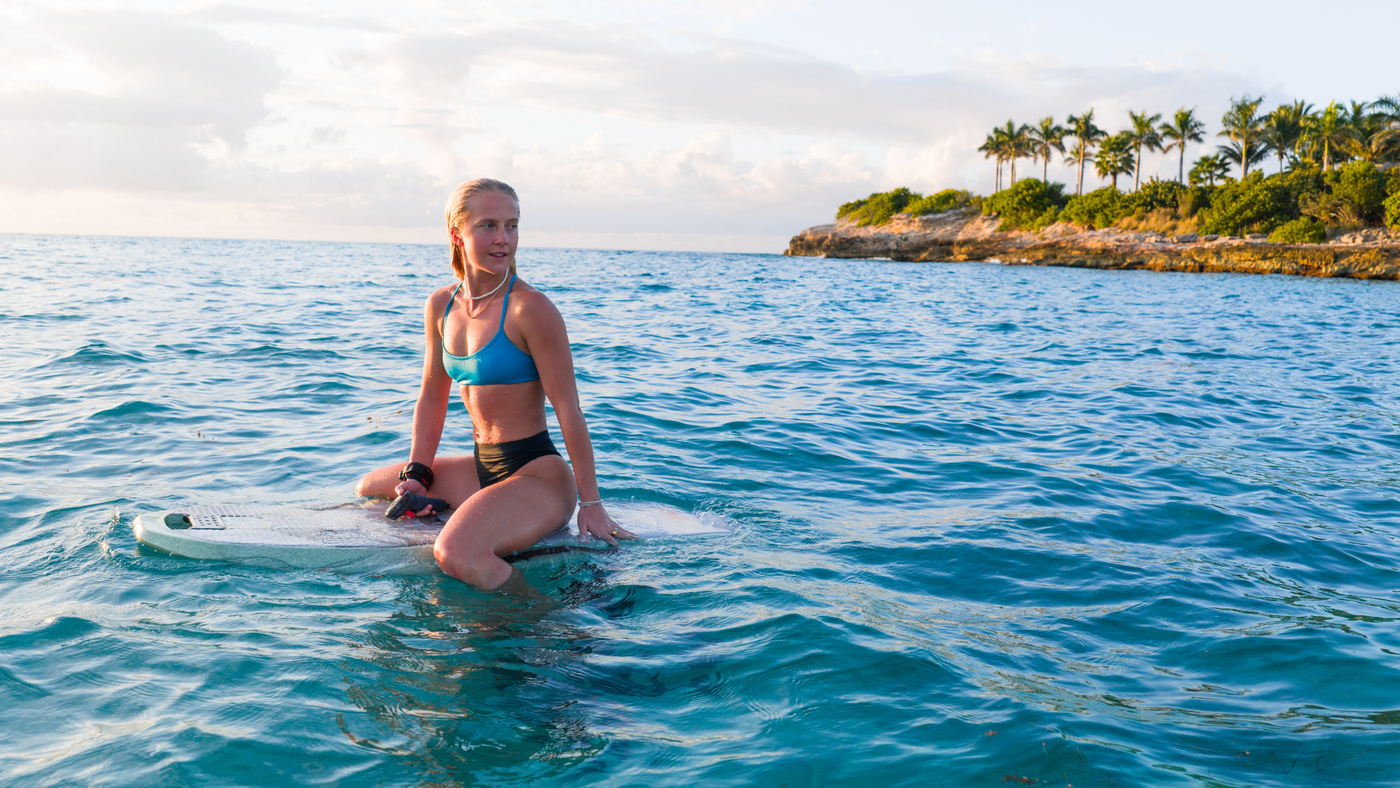
Type "electric board for the water" into a search engine and two very different machines come back: jetboards, which plane across the surface with a jet or propeller, and eFoils, which lift the whole board above the water on a hydrofoil wing. They look related in photos. On the water they have almost nothing in common. This guide explains how the two categories actually differ, so you can decide which one matches the riding you have in mind. If you are new to the foil side, our what is an eFoil guide covers the basics in more depth.
What a jetboard is
A jetboard is a motorised board that stays on the surface of the water. The motor drives a jet or propeller at the tail, and the rider steers with body weight while holding a hand throttle. Because the hull is always in contact with the water, the experience is fast, loud underfoot and physical: spray, vibration and constant surface feedback are part of the ride.
That surface contact also defines the engineering trade-off. Pushing a hull across water takes a lot of energy, and the drag rises sharply with speed. Jetboards typically compensate with large motors and high battery draw, which is why most published ride times in the category are measured in fractions of an hour rather than hours.
What an eFoil is
An eFoil is an electric hydrofoil. A mast under the board carries a wing, and once the wing generates enough lift the board rises out of the water entirely. From that point the only thing touching the water is the slim mast and wing, so drag falls instead of rising, the ride goes quiet, and the power needed to cruise drops.
That efficiency shows up directly in ride time. The Waydoo Flyer EVO Pro Plus runs up to 120 minutes on a charge, and even the entry Flyer EVO Lite is rated for 100 minutes. The feeling is also different in kind, not just in degree: riders consistently describe eFoiling as flying over the water rather than driving across it.

The differences that decide it
- Learning curve. A jetboard is quicker to stand up on, because balance works like other boardsports on the surface. An eFoil asks for a few sessions of patience while you learn to manage lift, and then gives you a skill that keeps deepening. Our honest take on that process is in is eFoiling hard to learn.
- Ride time. Flight above the water is efficient. The Flyer EVO's 100 to 120 minute runtime is possible because the hull leaves the water at cruising speed. Surface boards fight drag the whole session.
- Noise and wake. A foil in flight is close to silent and leaves almost no wake, which also matters for how welcome you are on busy European water.
- Conditions. An eFoil is made for calm, open water: lakes, bays, wide rivers where local rules allow. Jetboards keep working in rougher surface texture, at the cost of a harder, wetter ride.
- Weight and logistics. Both categories involve serious batteries. The Flyer EVO is modular: board, mast, wing, propulsion unit and battery separate for transport, and upgrade in parts later.
Where the Flyer EVO fits
Waydoo's Flyer EVO line covers four configurations on one modular platform. The Max Plus (€6,999 at the time of writing) pairs a 130 L board with a 6000 W propulsion unit and carries riders up to about 130 kg, which is why it is the usual recommendation for first boards and families. The Pro Plus (€7,033) puts the same power on a 90 L board that stays with you from first flights to 52 km/h. The Lite (€5,807) is the accessible entry point, and the Master (€9,546) is the 75 L carbon performance build. All four share the Flight Assistance System and swap wings, masts and propulsion units within the same ecosystem.

One honest segmentation note: if you already ride a prone, wing or downwind foil and mainly want motor support rather than a complete new platform, a foil assist is the better tool, and we compare the two directly in foil assist vs eFoil. And if what you actually want is to explore under the surface rather than fly above it, that is the Subnado family's job.
Try the difference before you decide
Specs describe the two categories; ten minutes on the water settles the question. Waydoo Europe ships from EU stock with local dealers across the continent, and a demo session with a dealer is the fastest way to feel what flight does differently. What eFoiling costs to get into, and what you get at each price point, is broken down in how much does an eFoil cost in Europe.
Book a demo with your nearest dealer
Related reading: how fast an eFoil goes, eFoil safety gear and rules, and eFoil laws in Europe.