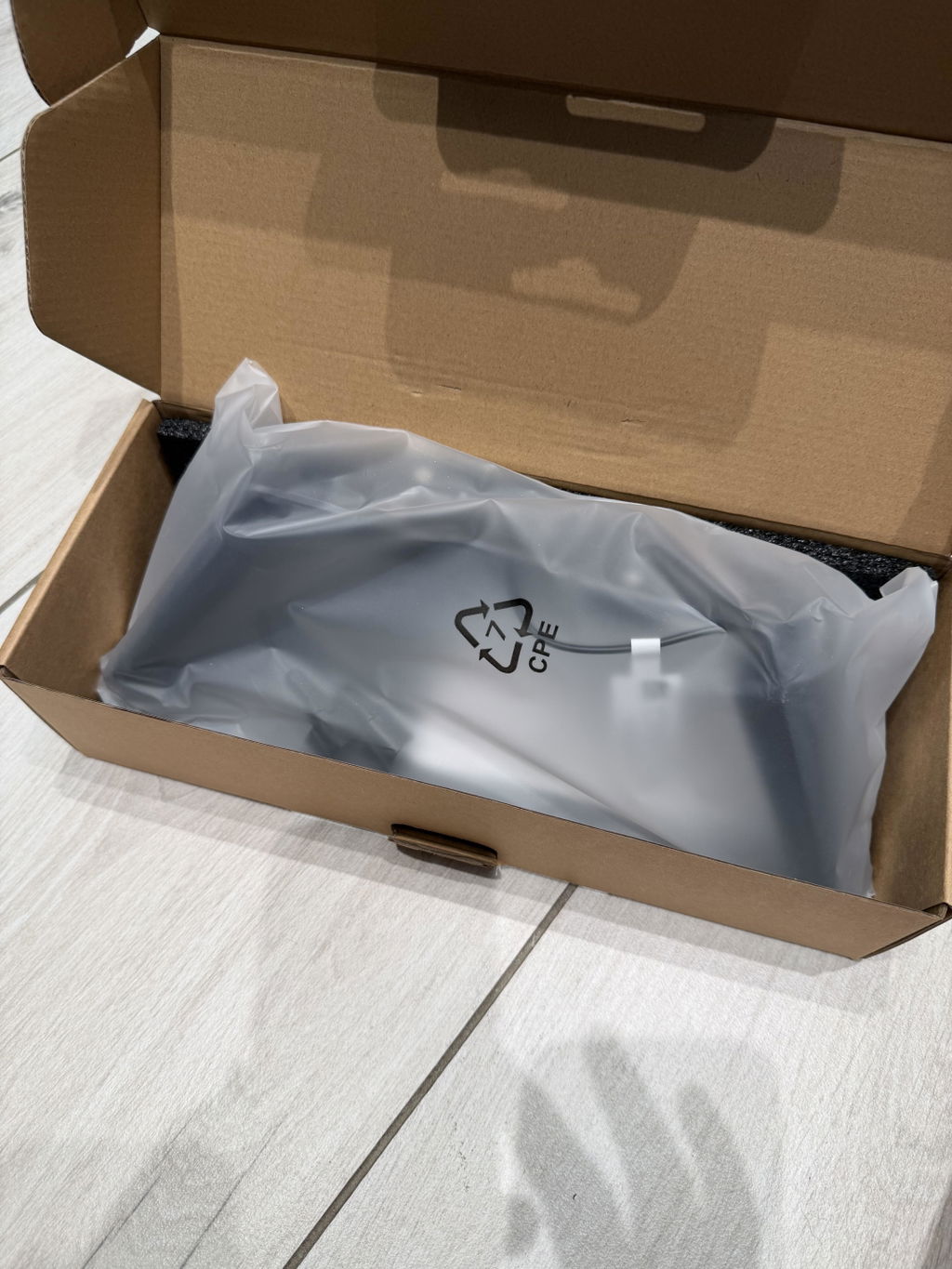
The most common hesitation we hear about foil assist systems has nothing to do with thrust or battery figures. It is the workshop question: what do I have to do to my board? The answer with the Waydoo FoilBoost is very little. The unit mounts to the mast under your existing board with an adjustable pad system, and Waydoo rates the install at about 10 minutes. This guide walks through what arrives in the box, how the mount works, and what to do before the first ride. If you are still comparing systems rather than fitting one, start with our foil assist buyer's guide.
What's in the box
The FoilBoost kit (€3,122 at the time of writing) arrives complete rather than as a base unit plus add-ons:
- FoilBoost Propulsion Unit
- Two lithium-ion batteries
- Charger, charger station and AC cable
- Remote and remote charging cable
- Coupling antenna in two lengths (1.5 m and 1.1 m)
The second battery is worth pausing on. The two packs hold 432 Wh between them and are rated for up to 40 minutes of assist running time combined, and because assist power is only used in bursts for take-off and link-ups, that translates into a full session for most riders. Carrying the charged spare in your kit doubles the day without waiting on the 2.5 hour charge.
How the mount works
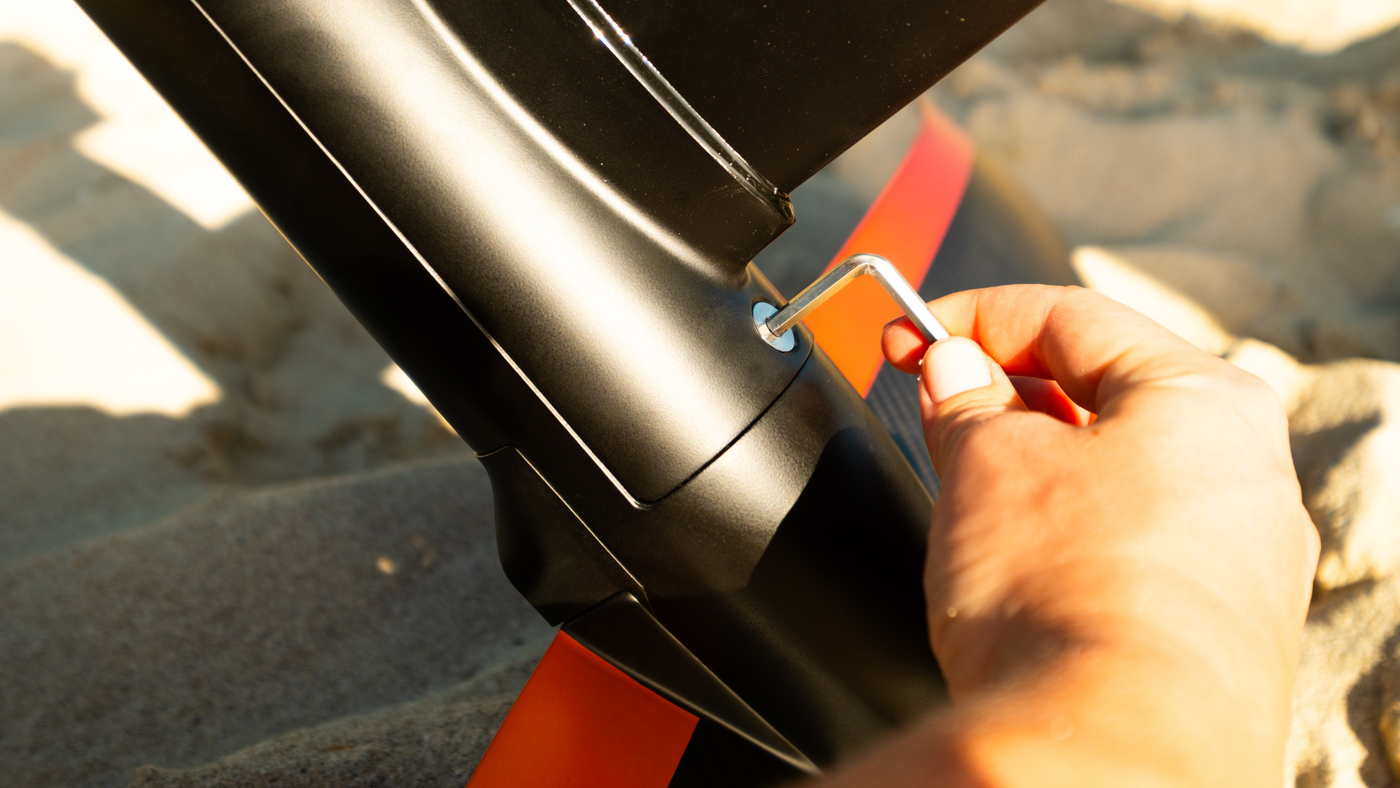
The FoilBoost clamps to the foil mast just under the board using front and rear pads and M5 bolts, with the 42.5 cm unit sitting in line with the mast. The pad system is adjustable: combining the standard and extended pads with the standard M5×25 or extended M5×45 bolts covers mast sections from roughly 96 mm to 144 mm, which is why Waydoo quotes over 98% mast compatibility based on internal testing. In practice that covers the common aluminium and carbon masts riders bring to it, though compatibility can vary with unusual mast designs, so check your mast dimensions against the ranges before ordering.

The 10-minute install, in practice
The workflow on the beach is short: position the unit against the mast under the board, fit the pads for your mast size, tighten the bolts with a hex key, route the coupling antenna, and pair the remote. The FoilBoost manual covers the exact sequence with torque guidance and pad selection tables, and it is the reference to work from on the first install. After the first time, refitting is a familiar few minutes with a hex key, which is what makes the next point possible.
One unit, several boards
Because the mount clamps to the mast rather than modifying the board, the FoilBoost moves between setups. Riders who split time between prone, wing and downwind boards can run one unit across the quiver, refitting it to whichever board the day calls for. At 5.7 kg for the system with 33 kg of thrust, it adds meaningful power for take-offs and link-ups without turning any of those boards into a different machine. What that thrust figure means for your weight and wing is covered in how much thrust a foil assist needs.

Before the first ride
- Charge both batteries fully with the included charger station: 2.5 hours each from empty.
- Check the bolts after the first session. New pad installs settle; a quick hex-key check is standard practice with any mast-mounted hardware.
- Rinse after salt water. Fresh-water rinse and a dry cloth around the unit and connectors keeps the hardware healthy season after season.
One segmentation note: the FoilBoost is a tool for riders who already foil. If you are starting from zero and want powered flight above the water as a complete system, that is a different product, the Flyer EVO eFoil, and the comparison in foil assist vs eFoil will save you from buying the wrong machine.
See the FoilBoost kit and full specs
Related reading: FoilBoost vs Foil Drive, is a foil assist worth it, and foil assist by discipline.