The FoilBoost product page tells you it makes take-off easier and sessions longer. What it does not spell out is the part a buyer actually wants before spending this much: exactly what arrives, whether it fits the mast already in the garage, and what the second season costs. This piece answers those three, and nothing else.
What is in the box
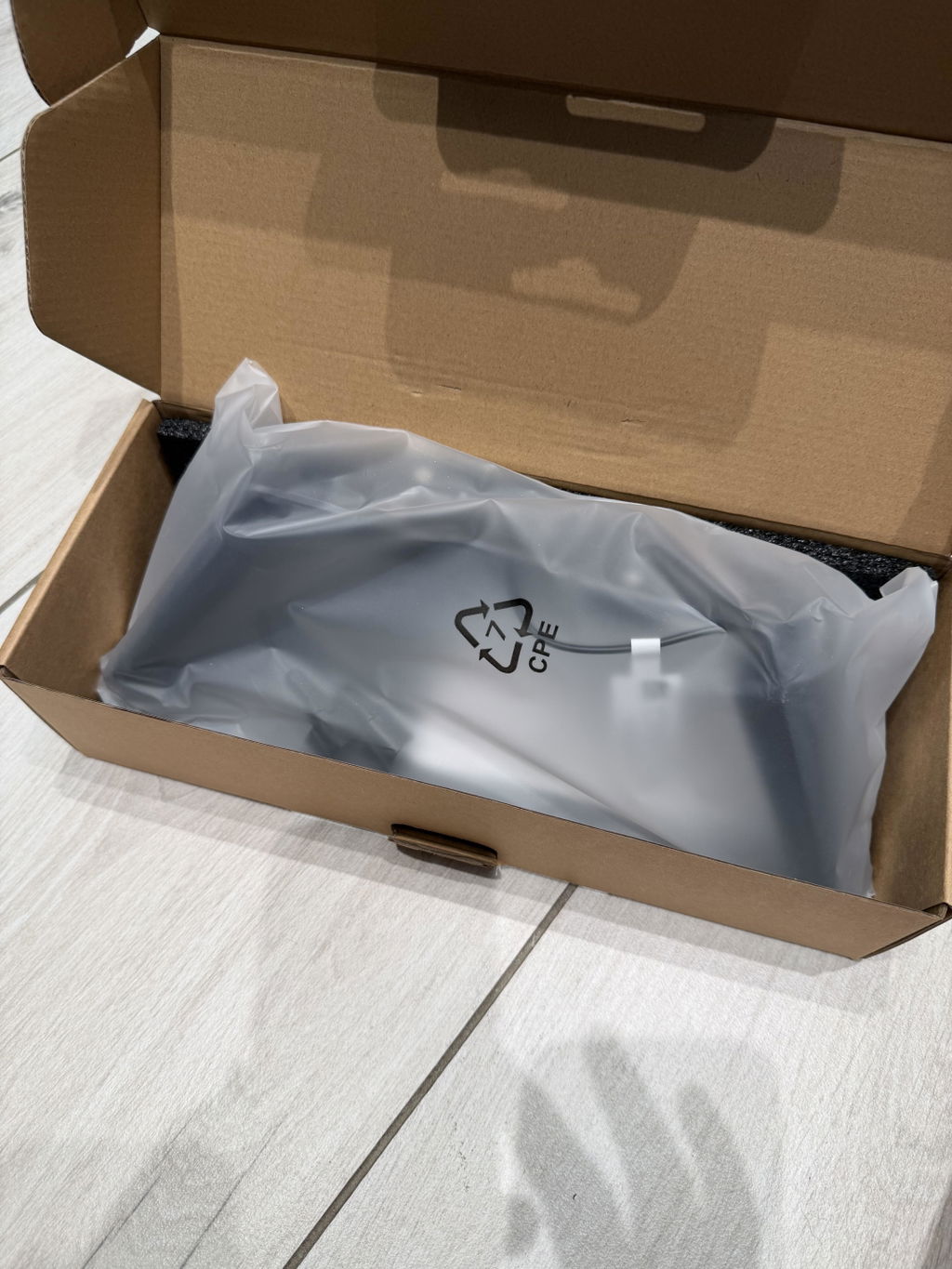
The FoilBoost Assist Kit ships as eight items:
| Item | Quantity |
|---|---|
| FoilBoost propulsion unit | 1 |
| FoilBoost lithium-ion batteries | 2 |
| FoilBoost charger | 1 |
| Charger station | 1 |
| Charger AC cable | 1 |
| Remote | 1 |
| Remote charging cable | 1 |
| Coupling antenna, 1.5 m and 1.1 m | 1 |
Two batteries in the box is the detail worth pausing on. Most of the runtime arithmetic people do online assumes one pack, and it is wrong. The whole foil assist range is two products: the kit and a spare pack.

What the numbers mean once you are on the water
The kit delivers 33 kg of thrust from a 432 Wh system at 43.2 V nominal, weighs 5.7 kg with both batteries fitted, and the manufacturer states up to 40 minutes of runtime. Charging both packs in parallel takes roughly 2.5 hours, so a morning session and an afternoon session on the same day is realistic if you plan the charge over lunch.
Read the 40 minutes as motor time, not session time. On prone and downwind the motor works in bursts to get you up and connected, then rests while the swell does the work. On a light wind wing day it runs more of the time. Two riders with the same kit routinely report different session lengths, and neither is wrong.
One thing the specification sheet deliberately does not give you is a wattage. Waydoo rates this product by thrust rather than by power, and no motor power figure is published anywhere the manufacturer controls. If you see one quoted, it was derived by somebody else. Compare on thrust and on runtime, which are both published.
Whether it fits the mast you already own
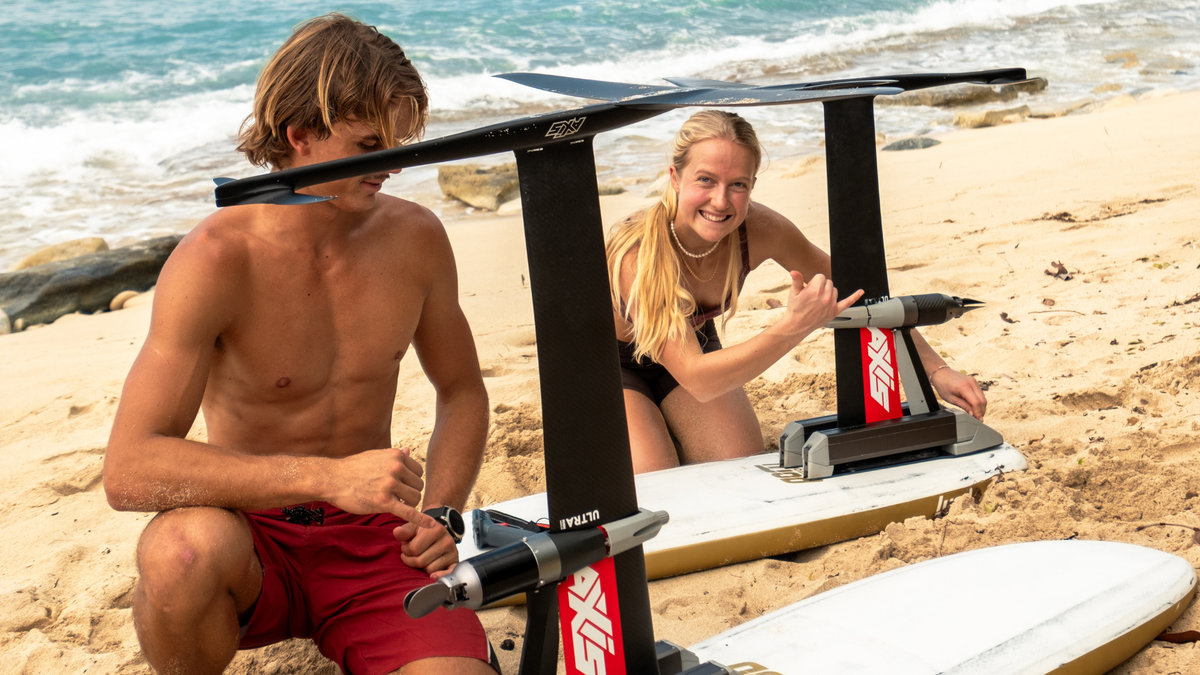
Fit is decided by mast chord length in millimetres. Not by board, not by brand. The published compatibility range is 96 to 144 mm, spread across pad and bolt combinations: standard pads cover 106 to 126 mm on the shorter bolt and 106 to 144 mm on the longer one, mixed pads cover 101 to 119 and 101 to 139 mm, and extended pads cover 96 to 114 and 96 to 134 mm.
Two caveats that come from the manufacturer rather than from us. The figures come from internal testing and can vary with mast design, so they are a guide rather than a guarantee. And the mast clamp is not optional: running the unit without it may damage the product. Measure the chord of your mast at its widest point, then check it against the range before you order. If the number lands near an edge, ask us instead of guessing.

What the second season costs
The kit is EUR 3,122 at the time of writing. The running cost after that is mostly batteries. A FoilBoost spare battery is EUR 605 for one pack or EUR 1,210 for two at the time of writing, and a third pack in the bag is what turns a two-session day into a three-session day without waiting on a charger. Set against a complete eFoil, which starts at roughly twice this, that is the trade the whole product rests on: you already own the board and the mast, so you are only buying power.
Warranty is where the detail matters, because it is not one number. Waydoo Europe publishes cover of up to two years and states that it varies by component. On the FoilBoost the split is: propulsion unit, remote and charger two years; batteries one year and under 200 cycles; front pull propeller six months. That last one is honest rather than mean, because the propeller is the part that meets the water first. Any claim, whatever the component, goes through the support claim form rather than through us, and the downloads page carries the manual and the battery transport documents if a carrier or an airline asks for them.
Who should not buy one
FoilBoost is for riders who already foil. It mounts under a board you own, on a mast you own, and it assumes you can already ride the thing once it is up. If you are starting from nothing, this is the wrong product and the honest answer is an eFoil from the Flyer EVO range: the Flyer EVO Lite, the Flyer EVO Max Plus or the Flyer EVO Pro Plus arrives complete and does not need a foil setup to already exist. The Jobe Epix Set is the same answer in a package that stores smaller. If you are choosing between the two categories rather than between two kits, read the thrust guide and the category comparison first.
Related reading: which masts and boards a FoilBoost fits, how the battery and charging work, how it compares with the alternative, and whether a foil assist or an eFoil suits you.