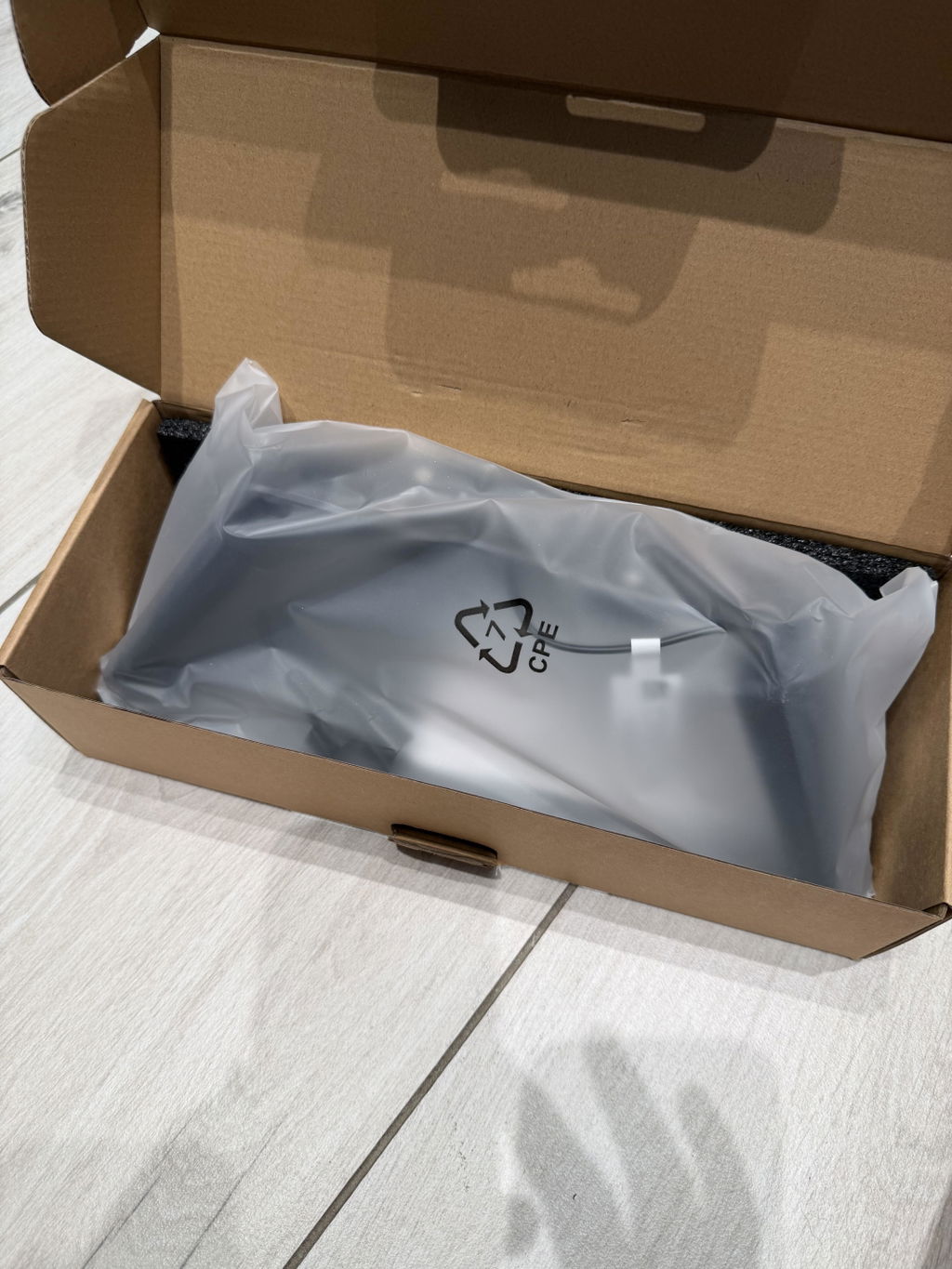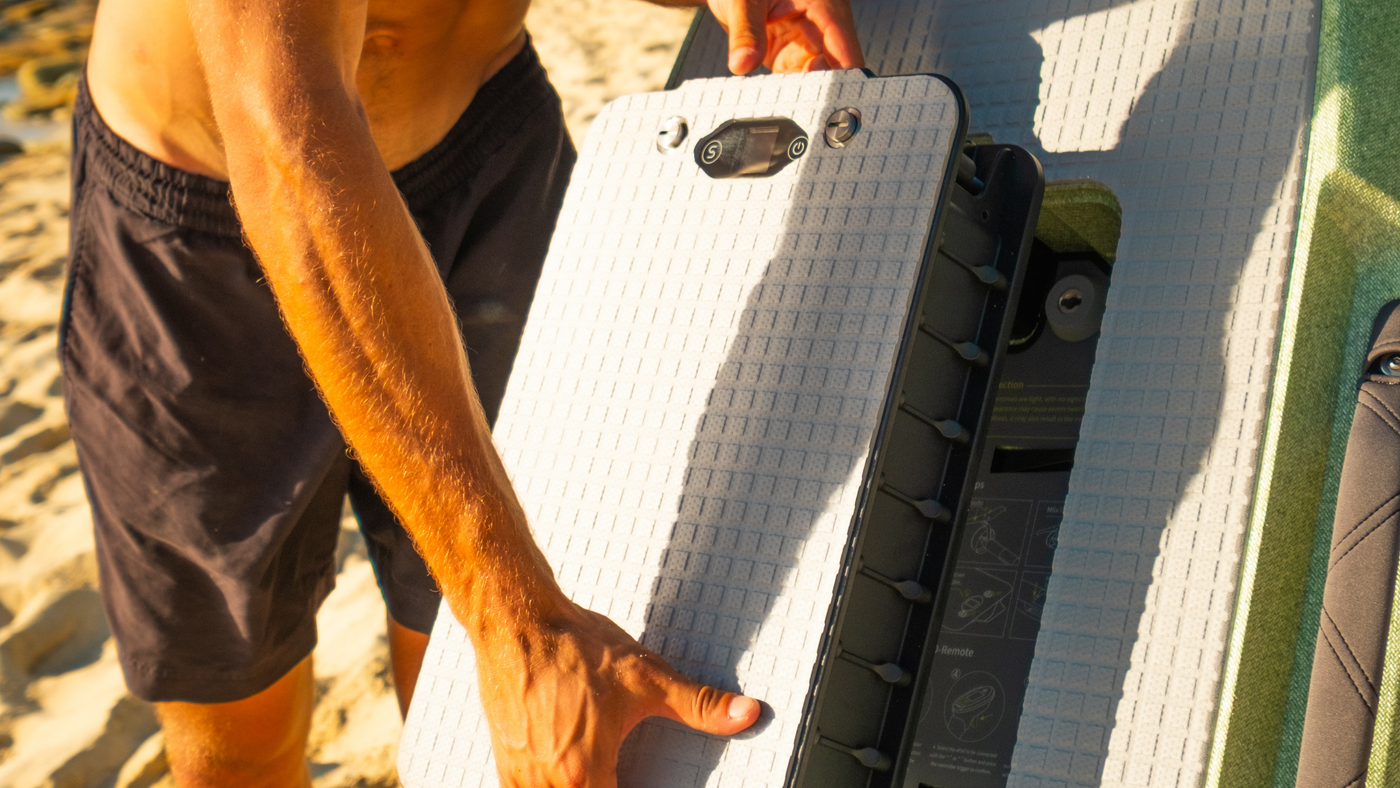
An eFoil battery is an expensive component to replace, and the way it is charged, stored and moved has more influence on its working life than anything you do on the water. Our eFoil battery life and range guide covers how long a charge lasts during a session; this guide covers everything that happens off the water: correct charging, storage between sessions and over winter, safe transport, and what to check when a battery refuses to charge. The examples use Waydoo's Flyer EVO Powerflight Battery, but the principles apply to any large lithium-ion pack used around water.
How to charge an eFoil battery
Three rules cover most of what matters, and all three come straight from Waydoo's official guidance:
- Charge in a dry, ventilated area. Never charge a wet battery. After a session, rinse the connectors' surroundings if needed, dry the pack thoroughly, and only then connect the charger. Keep the charging spot clear of anything flammable.
- Charge between 10 °C and 35 °C ambient temperature. A pack that is still warm from riding, or one that has been sitting in a cold garage in January, should come back to room temperature before it goes on the charger.
- Use the official charger only. The Powerflight packs are designed around the Powerflight Charger (604 euro at the time of writing) and the Powerflight Invertable Charger (967 euro), which adds inverter output for charging away from a wall socket. Third-party chargers are not worth the risk to a pack of this size and value.
Stay in the habit of starting the charge while you can still look in on it, rather than leaving a freshly connected pack unattended overnight. It takes nothing extra and removes the scenario every lithium safety guide warns about.
eFoil battery storage: between sessions and over winter
Between sessions, the storage rules mirror the charging rules: dry, moderate temperature, away from direct sun. The one habit that costs riders real capacity is leaving a pack baking in a car boot or a metal shed through a heatwave. A shelf indoors, out of the sun, is all the battery asks for.
Winter storage deserves more care, because the pack may sit untouched for months:
- Store at partial charge, not full and never empty. Around half charge is the widely accepted resting point for lithium-ion packs going into storage. A battery stored flat can drop below the level where it will accept a charge at all.
- Check it every few weeks. Batteries self-discharge slowly. If the level has drifted down noticeably, top it back up to the storage level.
- Keep it indoors at a stable, moderate temperature. An unheated shed that swings below freezing is the wrong place; a dry indoor room is right.
Come spring, give the pack a full charge with the official charger before the first session, and inspect the housing and connectors for any damage that appeared over the break.

Fireproof battery box: safe transport and storage
Large lithium packs should travel and rest in something built for the job. Waydoo's Fireproof Battery Box (604 euro at the time of writing) is designed around the Powerflight battery: a tough aluminium body with an integrated water bag, built to contain heat if a cell ever fails. For anyone driving to the water every weekend with a 1800 Wh or 2300 Wh pack in the back of the car, or storing one at home over winter, it is the correct home for the battery, and it doubles as protection against the knocks of transport.
Two transport rules to keep in mind:
- Flying is off the table for eFoil batteries. Passenger airlines cap lithium batteries at 100 Wh without approval, and nothing in the eFoil class comes near that limit. eFoil batteries travel by road, never in checked luggage. If you want battery-powered watersports that genuinely fly with you, the airline-friendly option in the Waydoo range is covered in our underwater scooter travel guide.
- Secure the pack in the vehicle. Flat, strapped or boxed, and shaded. Do not leave it loose in a hot boot at the beach all afternoon; take it out, or park in shade and crack the windows' worth of ventilation the box allows.
eFoil battery not charging? Work through this checklist
A pack that will not charge is usually a condition problem, not a fault. Work through these customer-safe checks in order:
- Confirm you are using the official Waydoo charger and that its indicator lights up when plugged into the wall on its own.
- Try a different wall socket to rule out the supply.
- Check the temperature. Below 10 °C or above 35 °C the pack may refuse to charge by design. Bring the battery to room temperature and try again.
- Make sure everything is dry and clean. Inspect the charging connectors on the battery and charger for moisture, sand or debris, and dry or brush them off gently. Look only; never insert tools into connectors.
- Reseat the connections firmly and watch for the charging indicator.
If the battery still refuses to charge, or if you ever see swelling, damage to the housing, or an error on the board or remote, stop there. Do not open the pack, and do not attempt any repair; there are no user-serviceable parts inside a lithium battery of this size. Our troubleshooting page covers the official next steps, and warranty cases go through Waydoo's Claim portal, where the support team will tell you exactly what to do with the pack.
Habits that protect battery lifespan
None of this needs to feel like maintenance. The riders whose packs stay healthy season after season simply fold a few habits into the routine:
- Rinse and dry after salt water. Salt residue is the enemy of connectors. Fresh-water rinse around the battery bay, dry cloth, done.
- Charge soon after riding, not weeks later. Coming home with a nearly empty pack and forgetting it in the garage is how batteries end up stored flat.
- Let temperature extremes pass. Not straight from cold water onto the charger, not left in the sun before a session.
- Give the pack a proper home. The fireproof box between sessions, indoors over winter.

The same logic applies across the Waydoo range: the FoilBoost Battery (432 Wh, 605 euro at the time of writing) follows the same charging and storage rules in a smaller format. A spare pack, cared for the same way, is the established route to doubling a day on the water; how much time a charge actually buys you is covered in our battery life and range guide.
Related reading: eFoil battery life and range, the Flyer EVO model comparison, and travelling with underwater scooters.